%20300.png)
UMASS Landscaping Update

Pioneer Valley (Amherst)
General Conditions:
The spring season has raced forward during this past reporting period, due largely to unseasonably warm weather from March 30 – April 1 when highs reached the upper 70s and lows remained in the 50s. Warm spring nights seem to be a particularly strong driver of plant development in the spring, and most trees and shrubs have swollen or broken buds. A return to more seasonable conditions has tempered growth, and a string of freezing nights on April 8 and April 9 is a reminder that we have a long way to go before the threat of spring frost is behind us. Lawns are greening up, mosquitoes and black flies have made an appearance, and spring peepers are out in force.
Soil moisture remains good with several scattered rain showers over the past two weeks. Yet, surface soils can quickly dry out during warm and windy April days, so be especially mindful of watering needs for recent transplants until humidity and canopy cover increases. Long term water deficits remain, creating the possibility of earlier season water restrictions across various towns and cities. MassDEP will not be updating the water use restrictions map until the beginning of May.
Pests/Problems:
White pine weevil is an early season pest that can destroy the terminal leader on eastern white pine (Pinus strobus) and Norway spruce (Picea abies), along with less common ornamentals spruces, such as Serbian spruce (P. omorika) and Oriental spruce (P. orientalis). Trees in full sun are most vulnerable. Scout for evidence of feeding on the terminal leader of trees and apply an appropriate insecticide if there’s any evidence of injury.
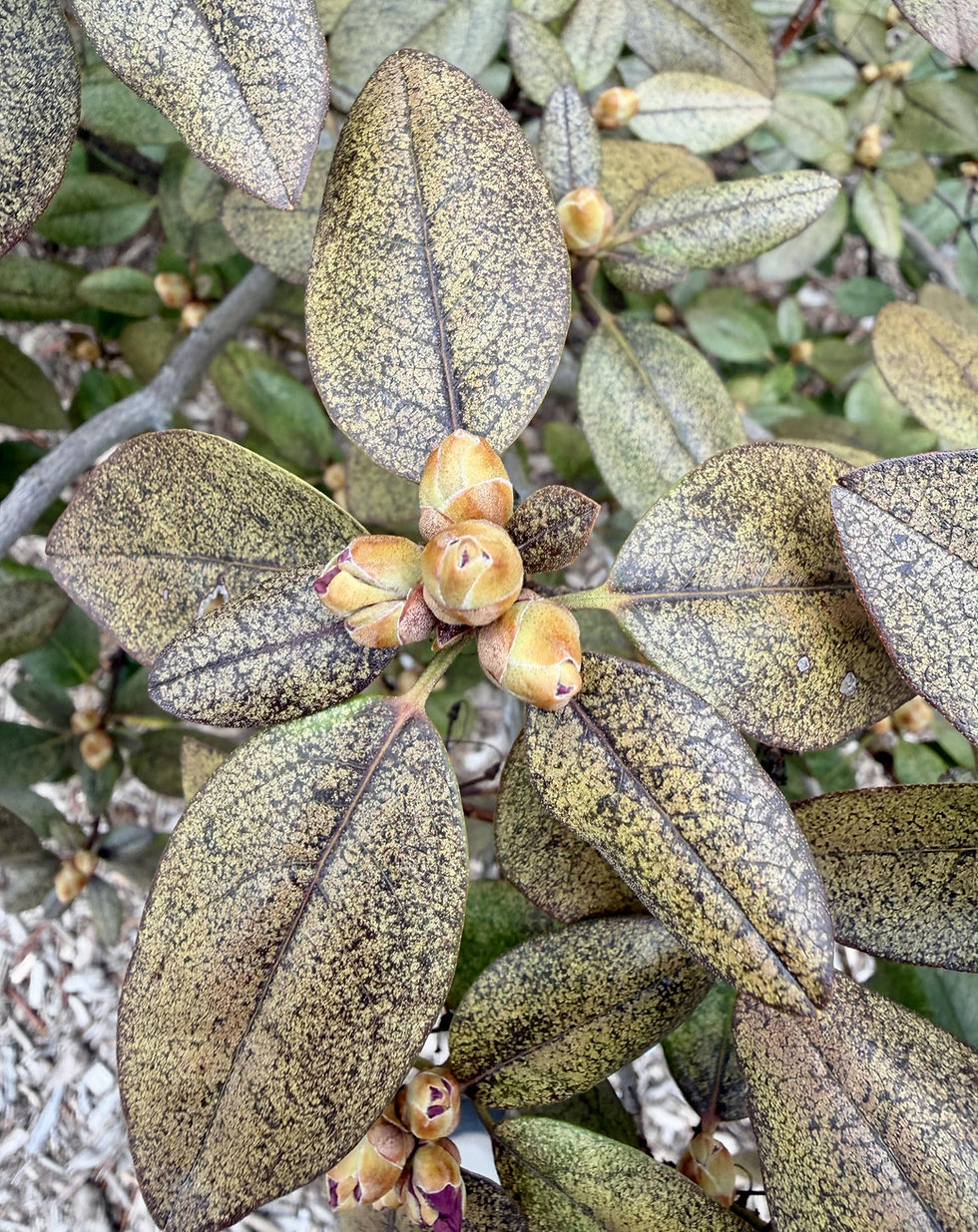
Lacebug infestations on rhododendron and andromeda can be a significant stress when outbreaks are serious (see photo recently taken on the UMass campus). However, do not apply insecticides until after these plants flower to avoid harming pollinators.

With buds breaking on various deciduous hardwoods, now is the time for foliar anthracnose treatments. In many cases, fungicide applications are not warranted if trees are otherwise healthy. But after very wet conditions in May of 2025 (7.87” statewide average; 3rd wettest May on record), foliar anthracnose was locally abundant, and overwintering inoculum could be high.
Winter injury continues to appear scattered and less serious than previous years in recent memory (e.g. 2023) but some plants are suffering from freeze and desiccation injury.
Nick Brazee, Plant Pathologist,
, reporting from Amherst.


Comments