%20300.png)
UMASS Landscape Update
- Spaeth Property Service
- Jul 11, 2025
- 2 min read

Pioneer Valley (Amherst)
General Conditions:
We’ve entered the dog days of summer in the Pioneer Valley and are halfway through the calendar year. Conditions over this past reporting period have ranged from undeniably pleasant (4th of July) to hot and swampy. Heat index values have once again hovered at or above 100°F during the latest heat wave (July 6 to July 8). Overall, this summer has produced fewer full sun days compared to previous years.
Despite the cloud cover, rainfall has recently been sparse in portions of the valley and some landscapes are really starting to dry out. From June 25 to July 8, many weather stations in Franklin and Hampshire Counties have recorded less than 0.5” of rain. Meanwhile, several stations in Hampden County have tallied 1-2”, once again illustrating the patchy distribution of summer thunderstorms. Total June precipitation ranged from roughly 2.5–4.5” in Hampden County, 3.0–4.75” in Hampshire County, and 3.0–5.0” in Franklin County.
While upper soil horizons are clearly drying, there must be moisture in deeper horizons because oak (Quercus spp.), maple (Acer spp.), elm (Ulmus spp.), tupleo (Nyssa spp.), larch (Larix spp.), hemlock (Tsuga spp.), and many other trees on the UMass campus are still pushing new growth.
A medley of herbaceous perennials are in flower, including coneflower (Echinacea spp.), lilies (Lilum spp.), daylilies (Hemerocallis spp.), zinnias (Zinnia spp.), and butterfly weed (Asclepias tuberosa).
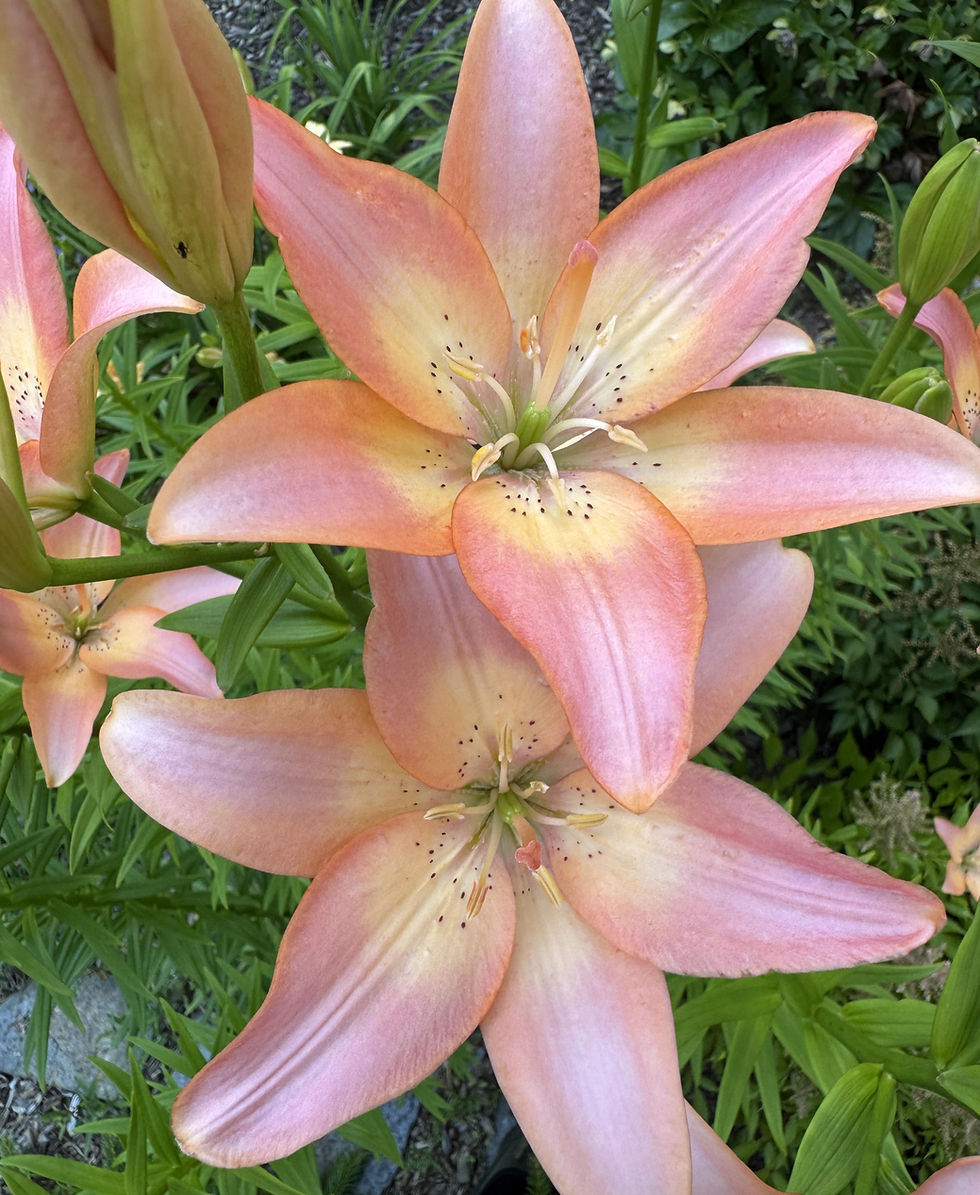
Given the heat and humidity over the past several weeks, landscaping right now is not for the faint of heart. Primary garden tasks include watering, weeding, mulching, and carefully scouting plants for pest and pathogen activity. Only through regular scouting can some issues be immediately addressed before serious damage takes place.

Pests/Problems:
Foliar pathogens are locally serious on certain trees. Principally, beech leaf disease (Litylenchus crenatae ssp. mccannii), which has been very damaging to understory American beech (Fagus grandifolia) across western Massachusetts. Previously dense forest understories of beech are now expansive and open.
Lilac leaf blotch, caused primarily by Pseudocercospora, may be a problem once again on common lilac (Syringa vulgaris). Disease severity was high in 2023 and 2024 with some plants nearly defoliated by late August. If symptoms are developing on high value plants, then foliar fungicides should be applied as soon as possible.
Other diseases observed across the UMass campus include Botryosphaeria canker of crabapple, oak leaf blister, cedar-quince rust, maple anthracnose, and oak anthracnose. Despite pockets of high disease severity, many trees and shrubs appear vigorous and healthy, owing largely to the abundance of rain this spring and early summer. That could quickly change if we experience another late season drought.
Invasive scarab beetles, such as Oriental (Anomala orientalis), Japanese (Popillia japonica), and Asiatic garden (Maladera formosae) are all active right now, feeding on a variety of herbaceous and woody plants.
Oriental bittersweet (Celastrus orbiculatus) and Japanese knotweed (Polygonum cuspidatum), the Commonwealth’s two most destructive invasive plants, continue their takeover.
Mosquito populations have waned since their peak in early to mid-June, and blackflies are still swarming in the early morning and evening hours.
Nick Brazee, Plant Pathologist, UMass Extension Plant Diagnostic Lab, reporting from Amherst.


Comments